
White-Label Graphic Design for Leeds Agencies: Design Capacity Without Hiring
Most agencies do not lose design work because they cannot design. They lose it because design requests arrive in waves: a client launches a campaign, three retainers need social posts in the same week, a brand refresh lands on top of everyday posts, and the one in-house designer is already booked. Hiring a full-time designer for a peak that may last a month is expensive; turning the work away costs more.
White-label graphic design solves the capacity problem without changing who the client sees. Your agency keeps the client, the brief and the brand. A design team produces the work behind the scenes, and it arrives under your name.
What white-label design actually covers
Good white-label design is not just "someone makes a post". For agency work it usually means:
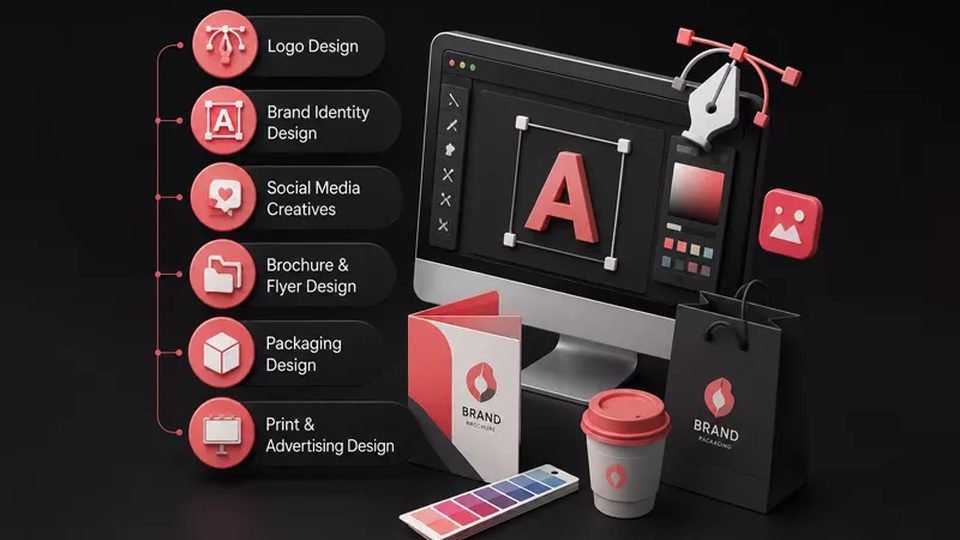
- Social media design — posts, stories and carousels in the client's brand, sized correctly for each platform, with text that stays readable on a phone screen.
- Brand assets — logos used correctly, colour and font systems applied consistently, and templates the agency can reuse rather than rebuilding every time.
- Campaign design — a set of assets for one launch or offer that look like one campaign, not five separate ideas.
- Marketing materials — flyers, brochures, presentations and ad creatives that match the brand instead of drifting from it.
- File discipline — organised source files, exports in the formats each platform needs, and versions the agency can find again next month.
Ask a potential partner which of these they do as standard. If templates, brand files and exports are vague, the agency ends up doing that work itself — which defeats the point.
Why Leeds agencies use it
Leeds has a strong agency and professional-services scene, and design is now part of almost every retainer, not a separate project. That makes design the bottleneck: strategy and copy scale more easily than visual production, because good design takes time per asset and cannot be rushed without showing.
A white-label partner lets an agency say yes to a bigger retainer, a new client, or a short campaign without recruiting, training and managing another designer. Nexolent describes itself as a white-label production partner — "Content, handled." — with graphic design as one of its core capabilities alongside video editing, and it claims 2k+ projects delivered. That figure is a Nexolent claim; judge it alongside samples in your clients' niches, not instead of them.
The model also protects the agency's margin. The agency prices the work, owns the client relationship and keeps the difference between its price and the production cost, rather than passing the client to a freelancer the client could then hire directly.
How to brief design so the first asset lands
Most white-label disappointments come from a thin brief, not weak design. Before the first asset, settle:
- The client's brand files — logo, colours, fonts, and two examples of design they like and two they do not
- The platform and size for each asset — an Instagram post, a story and a LinkedIn banner are different jobs
- The exact text, or who writes it — design built around placeholder text always needs rebuilding
- What must never appear — unlicensed images, invented claims, or a competitor's branding by accident
- Turnaround and who approves — one approver, one feedback round, one deadline
- How revisions are counted, so a "quick tweak" does not become a rebuild
That last point is worth agreeing in writing. Design feedback is subjective, and without a revision limit a single post can drift through five versions that each change the direction.
The mistakes that make agency design look cheap
- Inconsistent branding. A different font, colour or layout every week makes a client look like several businesses. Consistency is the first thing a viewer notices, even if they cannot name it.
- Text that cannot be read on a phone. A post designed on a large screen and never checked at phone size fails where most people will see it.
- Stock images used without thought. Generic stock that has nothing to do with the client's business makes an ad look like every other ad. Where a real photo is not available, the image choice still has to fit the message.
- No template system. Designing every post from scratch is slow and inconsistent. A good set of templates — built once, reused with new text and images — is what makes a monthly retainer workable.
- Feedback in fragments. When comments arrive as separate messages over several days, the designer rebuilds the same asset repeatedly. One collected round of feedback is faster and cheaper for everyone.
What to ask before you hand over a client
- Can you show me a set of assets for one brand, so I can see consistency, not just one good post?
- How do you handle a brand with strict guidelines — do you build templates from them, or design freely each time?
- What happens if a client changes direction halfway through a campaign set?
- How many revision rounds are included, and what counts as a revision versus a rebuild?
- Who owns the source files if we stop working together?
The answers tell you whether you are hiring a designer or a system. A monthly agency retainer needs the system: the same templates, the same formats, the same delivery rhythm, every month.
FAQ
Does white-label design mean the client will find out? No — that is the point of white-label. The work is delivered under the agency's brand, the agency presents it, and the client relationship stays with the agency.
Can white-label design handle a full brand refresh? A refresh is a bigger, slower job than monthly posts and should be scoped separately: strategy, guidelines and templates first, then the everyday assets built from them. Do not expect a refresh to happen at the same speed as a social post.
What if a client has no brand files at all? Then the first job is to build them: agree colours, fonts and a simple style before producing a month of posts, or every post will look different and the brand will never settle.
Is this only for large agencies? No. Smaller agencies often benefit most, because one designer cannot cover every client's design needs, and a white-label partner lets a small team offer design without a full-time hire.
Next step: send one client's brand files and one example of the kind of asset you need, and Nexolent will confirm what the first set includes. Use WhatsApp (UK) https://wa.me/447575150984, WhatsApp (Pakistan) https://wa.me/923149633145, or email info@nexolent.com.
More articles
Graphic Design for Dubai Restaurants and Cafes: Look Like Your Food Tastes
AI Ad Creatives for Toronto Brands: More Variants, Honest Claims
Get in touch
Ready to talk about your project? Reach Nexolent directly:
WhatsApp (UK) WhatsApp (Pakistan) Email us